India

100 Years of Gospel Work Among the Telugu People of India

This is an account of the men and women who worked among the Telugu people of the Indian states of Andhra Pradesh and Telangana between 1836 and 1936. The copy of the book kindy provided by Redcliffe College of digitisation was signed by the author. This title is in the public domain.

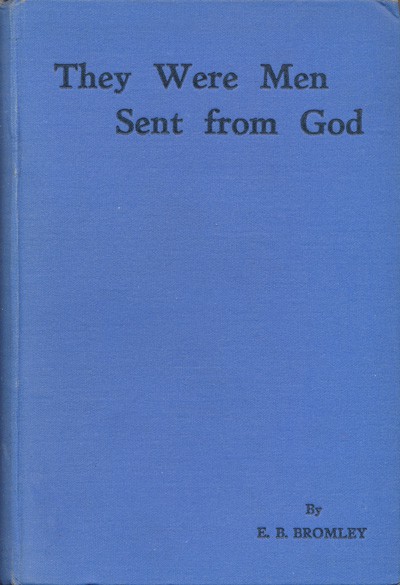
Eustace Blake Bromley [1882-1946], They Were Men Sent From God. A Centenary Record (1836-1936) of Gospel Work in India amonst Telugas in the Godavari Delta and neighbouring parts. Bangalore: The Scripture Literature Press, 1937. Hbk. pp.199. [Click to visit the download page]

Contents

  • Foreword
  1. Introductory
  2. Christian Contacts Prior to Missionary Occupation
  3. Preparation of the Chosen Instruments
  4. The Voyage to Madras, 1830
  5. Mr Anthony Norris Groves and India
  6. Madras in 1836
  7. In Masulipatam, 1836, 1837
  8. Settlement in Narsapur, 1837
  9. Early Struggle and Trials, 1837, 1838
  10. The Antarvedi Festival
  11. The Situation Gets More Depressing, 1838, 1839
  12. Palakol Occupied and Narsapur Reoccupied, 1839-1842
  13. Dawn at Last! 1842
  14. Proving God in Quiet Plodding, 1843-1847
  15. Andhradesa’s Debto to Christian Laymen
  16. Dowlaishweram, 1847, 1848
  17. The Godavari Delta Mission
  18. Station Work in the Early Times
  19. Converts From Caste, 1850, 1851
  20. Mr. Beer’s Systematic Itinerations
  21. Mr. Beer’s Closing Labours and Death, 1852, 1853
  22. The Situation Met With Fortitude, 1854, 1855
  23. Mr. Heelis Joins the Mission
  24. Evangelising the Hill Peoples, 1856-1858
  25. Subbareddi’s Rebellion, 1858
  26. The Gospel Borne Still Farther Afield, 1859, 1860
  27. “Which Doeth Great Things Past Finding Out”
  28. The Planting of Village Churches
  29. Mr. John Beer and the Narsapur School
  30. The Passing of Mr. Bowden
  31. Mrs. Bowden’s Home Call and Family Succession
  32. The Macraes and Amalapuram Field
  33. The Rounding Off of Our Story
  • Index

Foreword

The one thousand mile train journey from Madras to Calcutta skirting the Bay of Bengal is full of interest, revealing as it does the real Hindu India. In contrast to the West Coast, signs of Mohammedans, Portuguese and Parsees arc rare. Palm trees, ghauts, temples, tanks, rice-fields, sacred rivers and thatched roof villages are the predominant features of the landscape. Beside these things of immemorial antiquity the modern gifts of India’s best friend, are not incongruous and need no apology; railways, canals, roads, bridges and dams, holding in check the forces of famine and flood.

Leaving Madras by die night mail one is usually awakened before dawn by the noisy passage of the train over the many spans of the Kistna Bridge, nearly three hundred miles northwaird. One hundred: miles farther north-east is the great River Godavari. Roughly between these two rivers and in the neighbourhood of their deltas is the area known to Christians all over the world as the Godavari Mission Field.

Page i.
Rob

Recent Posts

Four Ways to Search missiology.org.uk for Resources on Christian Missions

Missiology.org.uk provides access to thousands of free articles and books on Christian missions. Here are…

1 week ago

Calcutta Christian Observer Now (partly) Online

The Calcutta Christian Observer was published in India between 1832 and 1862 by the Baptist…

6 months ago

Resources on Andrew Fuller: Life-long Advocate for Christian Missions

The Rev. Andrew Fuller was a Particular Baptist who served as the minister of two…

1 year ago

Dr. Thomas Gillard Churcher [1856-1947], Medical Missionary in Morocco and Tunisia

Thomas Gillard Churcher was born in London in 1856. After finishing school he went in…

1 year ago

Nine Biographies of Charles Haddon Spurgeon Online

I recently uploaded the first 40 years of Charles Haddon Spurgeon's monthly magazine, The Sword…

1 year ago

Three George Müller Biographies Online

Harold Rowdon notes that George Müller's... ...significance for world mission begins with his philanthropy. His…
2 years ago